Delhi (01 Nights) – – Jaipur (02 Nights) -Agra (02 Night) Khajuraho ( 2 Nights)
| Tour Highlights | |
|---|---|
| Delhi | Red Fort, Raj Ghat, Jama Masjid, Chandni Chowk, India Gate, President’s House, Humayun’s Tomb & Qutub Minar |
| Jaipur | Elephant ride to Amber Fort Palace, City Palace, Jantar Mantar (Observatory) & Hawa Mahal (Palace of Winds) |
| Fatehpur Sikri | Akbar’s Residential complex, Mosque & Tomb of Salim Chisti |
| Agra | Taj Mahal, Agra Fort |
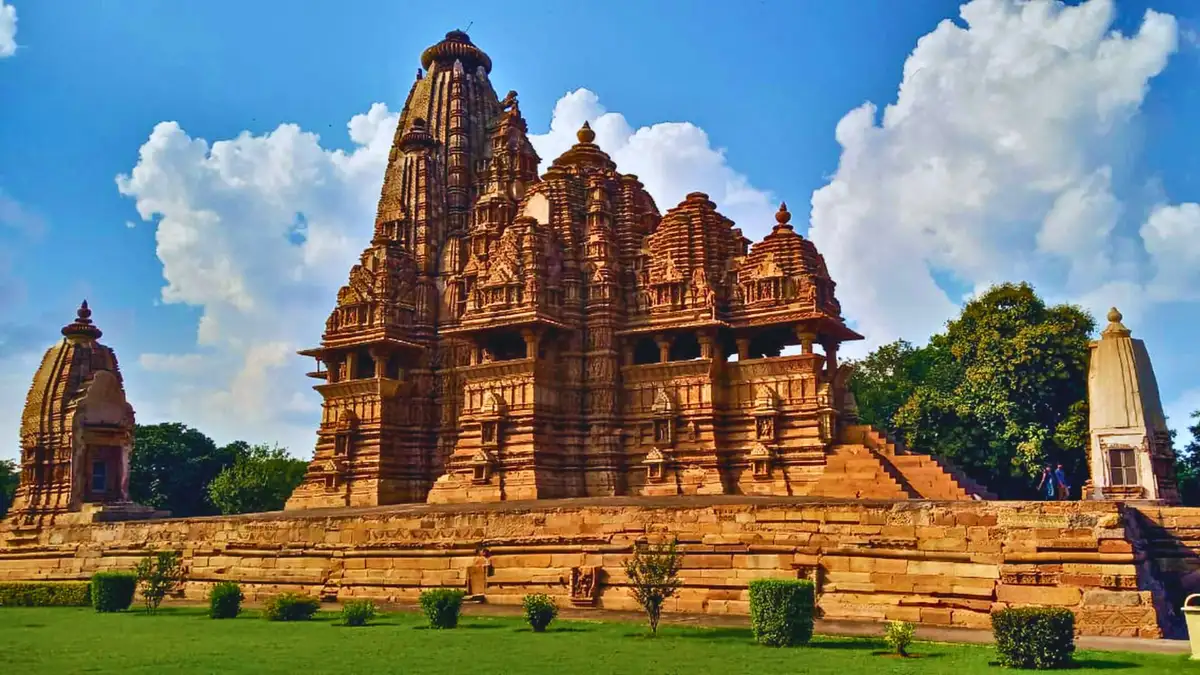
| Khajuraho | Kandariya Mahadev Temple, Javari Temple, Lakshmana Temple, Vamana Temple |
Upon arrival, you will be meeting with our representative at outside the airport and transferred to the Hotel
DELHI, the capital of India, is home to 16 million people, making it the third largest city in India. The strategic location of the city made it an attractive location for invading armies, and it served as the capital for many great empires that ruled India. Many of these Empires built significant monuments, and whilst the Mughal and the British are the most visible, while driving through the city you will see ruins from previous capitals, the earliest dating back to the 12th century.
Upon arrival, Check into the hotel
Later Half day city tour of Old Delhivisiting Jama Mosque, Raj ghat and drive past Red fort with Russian speaking escort cum guide.
The tour will begin with a visit to Raj Ghat, a simple memorial to Mahatma Gandhi. He is also famously known as the “father of the nation”.
Continue your tour to Jama Masjid by bicycle rickshaws, one of Asia’s largest mosques. People stream in and out of the mosque continuously and the presence of a nearby bazaar means that the area is rarely quiet. Enjoy the rickshaw ride at Old Delhi peddling through the narrow by lanes of Chandani Chowk
Overnight at Hotel in Delhi
Breakfast at the hotelafter breakfast, Check out from the hotel later proceed to Half day city tour of New Delhi IncludingQutub Minar, and drive past India Gate, the parliament buildings and drive past Presidential house
Qutub Minar, the tallest stone tower in India. Qutub-Minar in red and buff sandstone is the highest tower in India. It has a diameter of 14.32 m at the base and about 2.75 m on the top with a height of
72.5m. Qutbu’d-Din Aibak laid the foundation of Minar in AD 1199 for the use of the mu’azzin (crier) to give calls for prayer and raised the first floor, to which were added three more floors by his successor and
Son-in-law, Shamsu’d-Din Iltutmish (AD 1211-36) All the storeys are surrounded by a projected balcony encircling the minar and supported by stone brackets, which are decorated with honeycomb design, more conspicuously in the first floorWe will also visit Humayun’s Tomb, memorial of Mughal Emperor Humayun, built in the year 1562. The complex is a World Heritage Site & the first example of this type of Mughal architecture in India.
Later transfer to Jaipur –Upon Arrival at Jaipur transfer to Hotel Checkin hotel
Overnight at Hotel in Jaipur
Jaipur- A labyrinth of fascinating bazaars, opulent palaces and a futuristic observatory, Jaipur was the inspiration of the ruler Sawai Jai Singh, who moved the capital from Amber in 1727. Jaipur was designed by a young architect from Bengal and together they planned a city along the ancient Hindu treatise of “Shilpa Shastra”, a science similar to the better known Feng Shui. Jaipur is laid out in a geometric grid of streets and squares making it one of the earliest planned cities in India. In honor of the visit of the Prince Edward, then the Prince of Wales, the City was painted in rich terracotta, a tradition which has continued through the years. This is the reason why Jaipur is often called the “pink city”. Today it serves as the State capital for Rajasthan
Breakfast at the hotel
After breakfast at the hotel start a sightseeing tour of Jaipur.
Full day sightseeing of Jaipur visiting Amber fort, City palace, Observatory and Windsor palace
You will also be experiencing Elephant ride while ascending the Amer fort.
(Elephant ride is subject to availability failing Jeep ride will be provided)
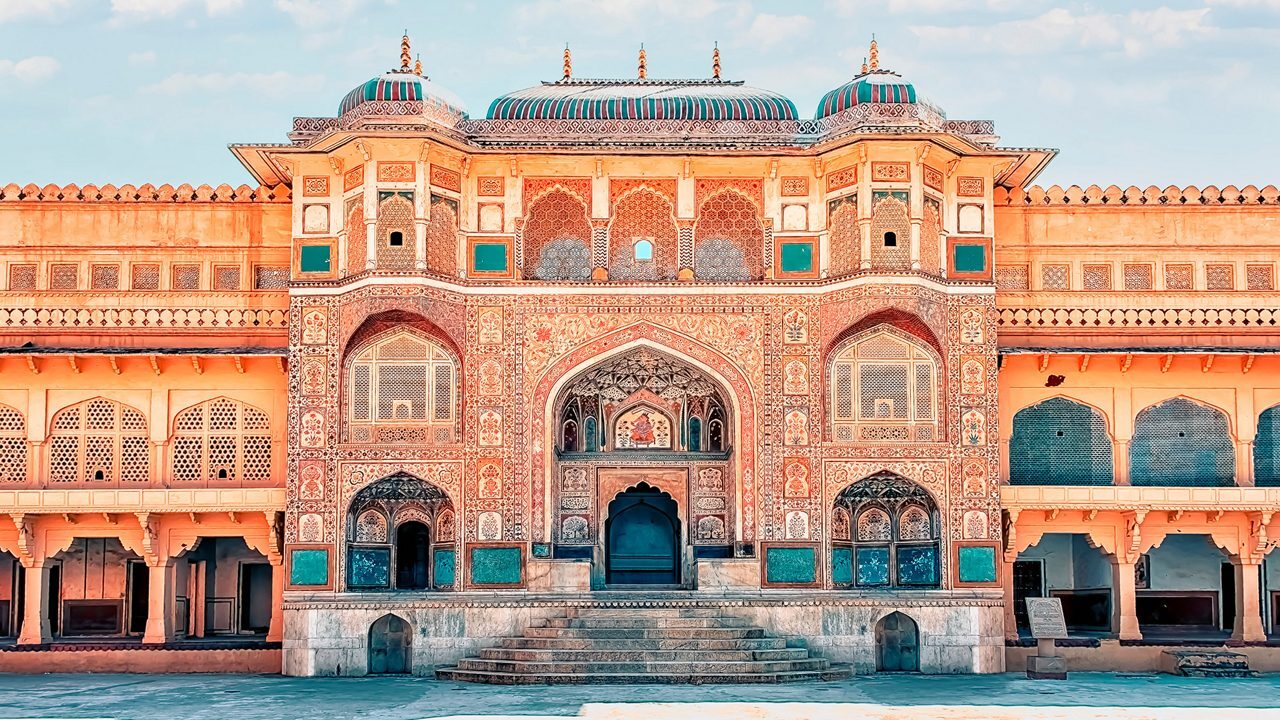
Amer Fort Palace – Amer is the classic romantic Rajasthan fort palace. Its construction was started by Man Singh I in 1592, and completed by his descendent Jai Singh I. Its forbidding exterior belies an inner paradise where a beautiful fusion of Mughal and Hindu styles finds its ultimate expression.
City Palace – A delightful blend of Mughal and traditional Rajasthani architecture, the City Palace sprawls over one-seventh of the area in the walled city. It houses the Chandra Mahal, Shri Govind Dev Temple and the City Palace Museum.
Jantar Mantar or Observatory – This is the largest and the best preserved of the five observatories built by Jai Singh II in different parts of the country. This observatory consisting of outsized astronomical instruments is still in use.
Hawa Mahal or Windsor Palace – The ornamental facade of this “Palace of Winds” is a prominent landmark in Jaipur. It is a five-storied structure of sandstone plastered pink encrusted with fine
Trelliswork and elaborate balconiesthe palace has 953 niches and windows. Built in 1799 by Pratap Singh, the Mahal was a royal grandstand for the palace women.
Overnight at Hotel in Jaipur
Breakfast at the hotel
After breakfast drive to Agra en-route visit en-route we will visit Fatehpur Sikri (Ghost Capital), the political capital of India’s Mughal Empire under Akbar’s reign, from the year 1571 until 1585, when it was abandoned, ostensibly due to lack of water.Visit Emperor Akbar’s Residential complex, Mosque & Tomb of Salim Chisti,Further we continue our drive to Agra, beautifully situated on the banks of river Yamuna. It achieved prominence as the capital of the Mughal Emperors from 1526 to 1628, remains major tourist destination because of its many splendid Mughal-era monuments,
Agra – This was the seat of the mighty Mughal Empire before it shifted its capital to Delhi, and it is home to some of their most inspired architectural creations including the Taj Mahal. In the 16th and 17th century, the Mughal Courts were at their most powerful, and were great patron of the arts, and Agra attracted artisans, poets and musicians from across India as well as Persia and Central Asia, transforming Agra into a cultural and architectural paradise
Overnight at Hotel in Agra
Breakfast at the hotel
After breakfast full day Agra city tour
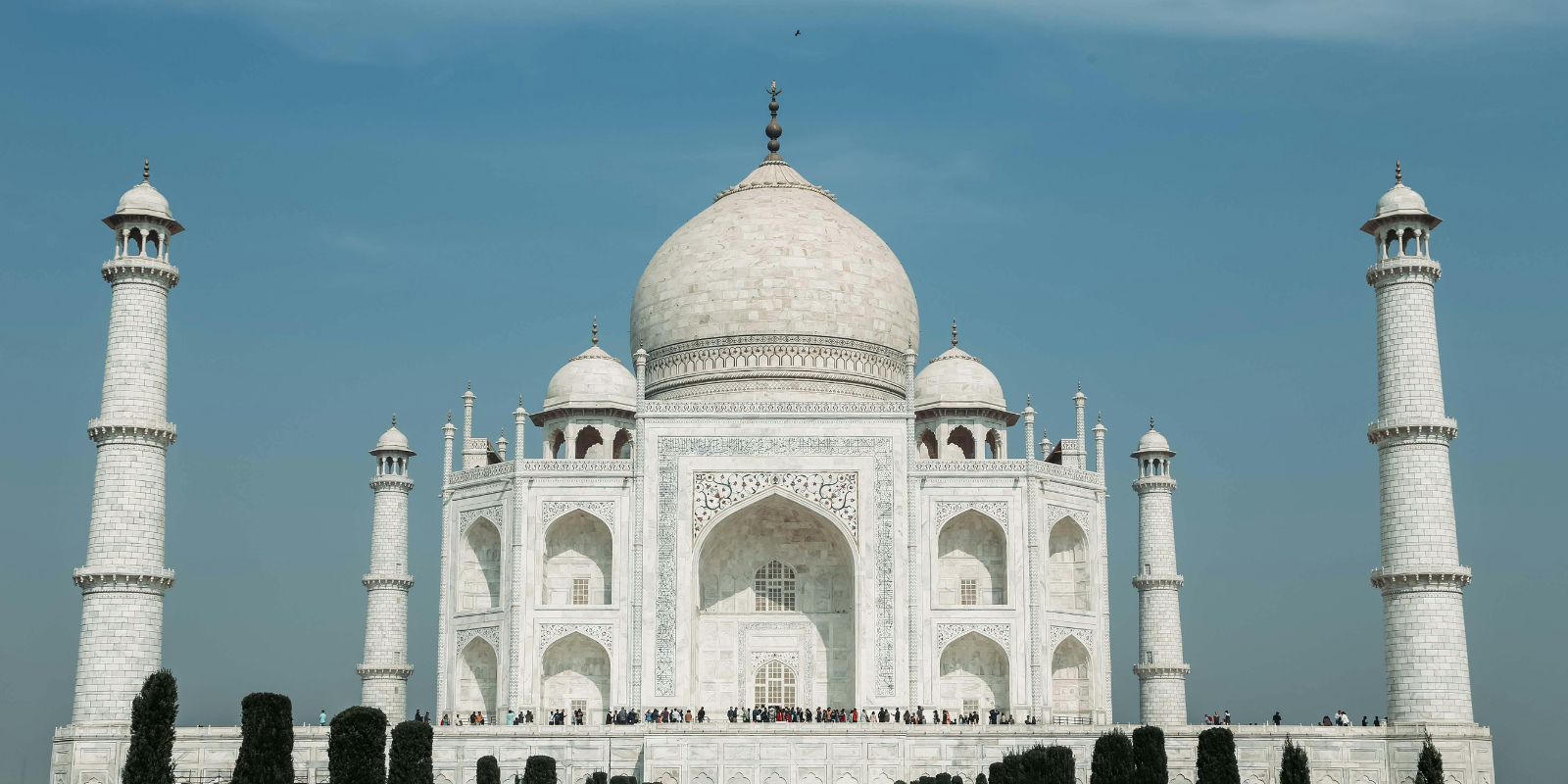
Taj Mahal- Little needs to be said about this architectural wonder which is always the soul raison-de-etre for every tourist’s visit to Agra. Built by Shah Jahan, the Taj is a white marble memorial to his beautiful wife Mumtaz Mahal. This monument took 22 years to be completed and was designed, and planned by Persian architect Ustad Isa. Apart from its stunning design balance and perfect symmetry, the Taj is also noted particularly for its elegant domes, intricately vehicleved screens and some of the best inlay work ever seen (Taj Mahal Closed on Friday)
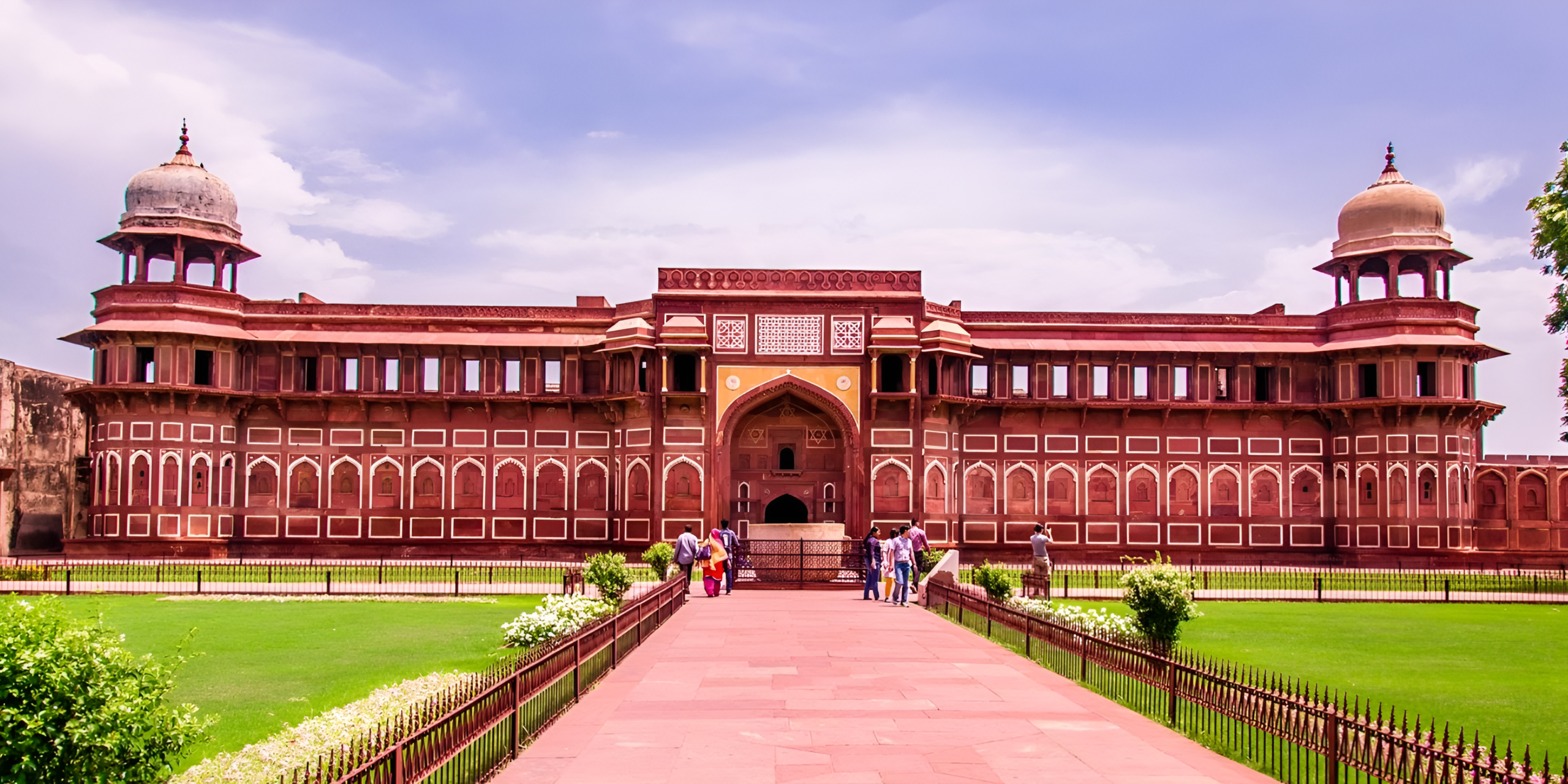
After noon visit Agra Fort – The red sandstone structure is surrounded by chahar-bagh, a four-square formal garden. Built by the famed Mughal emperor Akbar in 1565 AD, the fort is predominantly of red sandstone. Ensconced within is the picture perfect Pearl Mosque, which is a major tourist attraction. It lies on the bend of the river Yamuna, almost in the heart of the town. Akbar built it as his citadel over the years 1563-73 in the finest architectural style. It has imposing gates and walls of red sandstone and a moat
Itmad –Ud –Ullah– The interiors of which are considered better than the Taj One of the most beautiful Mughal tombs, Itmad-Ud-Daulah’s Tomb was built by Nur Jahan, the Empress of Jahangir for her father in 1628. The tomb is a resting place of the powerful personality in Mughal Court, Itmad-Ud-Daulah, whose life is very interesting. Formerly a very poor Persian merchant then named Mirza Ghiyas or Ghiyas Beg he became a minister and a trusted treasure in Akbar’s court. After Akbar’s death in 1605, his son Jahangir rose into power. Jahangir made Ghiyas Beg his chief minister and honored him with the title of Itmad-Ud-Daulah, the Pillar of State. Later, Jahangir met a beautiful daughter of Ghiyas Beg named Mehr-Un-Nissa and married
HerMehr-Un-Nissa soon played a significant role in the Jahangir’s court and was called Nur Mahal, the light of the Place. Owing to her influence, her father and brother were granted with privileges in the court. When
Ghiyas beg (Itmad-Un-Daulah) dies in 1622; Nur Mahal decided to build a mausoleum for him. Queen Mumtaz Mahal or the lady of the Taj was also from this prevailing family. The mausoleum is entirely made of white marble and graced with intricate decoration of inlay work, and marble-screen work belonging to the Islamic style. With its tranquil, small garden on the bank of Yamuna River, the tomb stands impressively elegant from a distance
Overnight at Hotel in Agra
Breakfast at the hotel
After breakfast transfer to Agra Railway station for Jhansi departure at 0810hrs and arrival in Jhansi at1043hrs, arrival in Jhansi straight drive to Khajuraho, upon arrival transfer to hotel
Optional Sound & light show –Khajuraho –on Direct Payment Basis
This fascinating light & sound – Spectacle evokes the life and times of the great Chandela Kings and traces the story of the unique temples from the 10th Century to the present day
The 50 minutes sound and light show is conducted by tourism department in the garden of western group of temples. The show is entertaining and informative about the construction, history and importance of the temples. The show runs in Hindi and English every evening
Overnight at Hotel in Khajuraho
After breakfast proceed for the sightseeing of the famous western temples of Khajuraho.
The Western group of temples: Primarily built in one style the temples have the ardhamandapa or the entrance, the mandapa or the assembly hall, the antarala or the vestibule and finally a pradakshina or a circumambulation running around the grabhagriha or the inner sanctum. The temples are divided in three major zones, the western, the eastern and the southern temples of which the western temples are the most popular ones.
The arch of Kandariya Mahadev shrine has meticulously carved various themes of life. Celestial beings, lovers serenading musicians all the movements captured in stone, frozen in time, yet retaining a quality of warm, pulsating life. The very stone seems to have taken on the living, breathing quality of the carved figures. Outer walls have three horizontal panels showing deities of the Hindu pantheon, and groups of lovers, a pageant of sensuousness, vibrantly alive. The Chousat Yogini temple dedicated to kali is also present but without the deity in the sanctum. The Matangeshwara temple is the only shrine used for worshipping. The temple is almost devoid of ornamentation. The Varaha Temple stands opposite the Matangeshwara temple and is dedicated to the fourth incarnation of Lord Vishnu in form of a Boar. The monolithic figure is exquisitely carved with 764 divine figures around it. The Lakshmana Temple, dedicated to the four armed and three headed man-lion-boar statues of Vaikuntha is the best preserved and the most evolved Vishnu temples. There are sculptures depicting many mythological stories such as the churning of the ocean and Kalia mardan. On the exterior the entire range of the Khajuraho temples is on display. Ecstatic street singers and the architect of the temples, surrounded by his apprentices are among the noteworthy images on this temple. The Vishwanath temple was supposed to be embedded with jewels, but only a stone lingam is what remains now. The exteriors of this temple however are the most stunningly beautiful. Here one can see nymphs can be seen playing on their flutes, removing thorns from their feet, fondling children and looking into a mirror. Some of the most erotic depictions are well. Another interesting temple is dedicated to the Sun God, the Chitragupta temple. It shows the Sun God driving the chariot drawn by seven horses. The exteriors show, royal processions, elephant-fights, hunting scenes, group dances and the lavish lifestyle of the Chandela kings and their court in its all pomp and glory
The Eastern Group of temples: The Brahma and the Hanuman temples are the most famous and well-preserved temples of this group. The Vamana temple shows all the ten incarnations of Lord Vishnu.
This place also has a few temples belonging to the Jain religion, probably because one of the descendants of the Chandela dynasty may have adopted Jainism. The prominent among these are the Ghantai temple, the Parsvanath and the Shnatinath temple.
Overnight at Hotel in Khajuraho
Breakfast at hotel
Morning at Leisure –
Later transfer to Jhansi Railway station for Jhansi – Delhi train at 1800hrs