Delhi (01 Nights) – – Jaipur (02 Nights) -Agra (02 Night) Varansi ( 2 Nights)
Immerse yourself in the history and religious culture of North India. Explore the historical
milestones of the Mughal and British empires in Delhi, and the fusion of cultures in the
palaces and forts of the Pink City, Jaipur. Marvel at Akbar’s ghost capital of Fatehpur
Sikri on your way to Agra, home of the world renowned Taj Mahal. Dip your feet in the
holiest of rivers, the Ganges at Varanasi, while witnessing the burning ghats, and don’t
forget to check out where the Buddha gave his first sermon.
| Tour Highlights | |
|---|---|
| Delhi | Red Fort, Raj Ghat, Jama Masjid, Chandni Chowk, India Gate, President’s House, Humayun’s Tomb & Qutub Minar |
| Jaipur | Elephant ride to Amber Fort Palace, City Palace, Jantar Mantar (Observatory) & Hawa Mahal (Palace of Winds) |
| Fatehpur Sikri | Akbar’s Residential complex, Mosque & Tomb of Salim Chisti |
| Agra | Taj Mahal, Agra Fort |
| Varanasi | Aarti Ceremony, Boat Ride, City Tour with temples & Sarnath |
Upon arrival, you will be meeting with our representative at outside the airport and transferred to the hotel
DELHI, the capital of India, is home to 16 million people, making it the third largest city in India. The strategic location of the city made it an attractive location for invading armies, and it served as the capital for many great empires that ruled India. Many of these Empires built significant monuments, and whilst the Mughal and the British are the most visible, while driving through the city you will see ruins from previous capitals, the earliest dating back to the 12th century.]
Upon arrival, Check into the hotel
Overnight at Hotel in Delhi
Breakfast at the hotel after breakfast, Check out from the hotel later proceed to full day city tour of Old Delhi visiting Jama Mosque, Raj ghat and drive past Red fort with Russian speaking escort cum guide.
The tour will begin with a visit to Raj Ghat, a simple memorial to Mahatma Gandhi. He is also famously known as the “father of the nation”.
Continue your tour to Jama Masjid by bicycle rickshaws, one of Asia’s largest mosques. People stream in and out of the mosque continuously and the presence of a nearby bazaar means that the area is rarely quiet. Enjoy the rickshaw ride at Old Delhi peddling through the narrow by lanes of Chandani Chowk
New Delhi Including Qutub Minar, and drive past India Gate, the parliament buildings and drive past Presidential house
Qutub Minar, the tallest stone tower in India. Qutub-Minar in red and buff sandstone is the highest tower in India. It has a diameter of 14.32 m at the base and about 2.75 m on the top with a height of
72.5m. Qutbu’d-Din Aibak laid the foundation of Minar in AD 1199 for the use of the mu’azzin (crier) to give calls for prayer and raised the first floor, to which were added three more floors by his successor and
Son-in-law, Shamsu’d-Din Iltutmish (AD 1211-36) All the storeys are surrounded by a projected balcony encircling the minar and supported by stone brackets, which are decorated with honeycomb design, more conspicuously in the first floor We will also visit Humayun’s Tomb, memorial of Mughal Emperor Humayun, built in the year 1562. The complex is a World Heritage Site & the first example of this type of Mughal architecture in India.
Later transfer to Jaipur –Upon Arrival at Jaipur transfer to Hotel Checkin hotel
Overnight at Hotel in Jaipur
[Jaipur- A labyrinth of fascinating bazaars, opulent palaces and a futuristic observatory, Jaipur was the inspiration of the ruler Sawai Jai Singh, who moved the capital from Amber in 1727. Jaipur was designed by a young architect from Bengal and together they planned a city along the ancient Hindu treatise of “Shilpa Shastra”, a science similar to the better known Feng Shui. Jaipur is laid out in a geometric grid of streets and squares making it one of the earliest planned cities in India. In honor of the visit of the Prince Edward, then the Prince of Wales, the City was painted in rich terracotta, a tradition which has continued through the years. This is the reason why Jaipur is often called the “pink city”. Today it serves as the State capital for Rajasthan
Breakfast at the hotel
After breakfast at the hotel start a sightseeing tour of Jaipur.
Full day sightseeing of Jaipur visiting Amber fort, City palace, Observatory and Windsor palace
You will also be experiencing Elephant ride while ascending the Amer fort.
(Elephant ride is subject to availability failing Jeep ride will be provided)
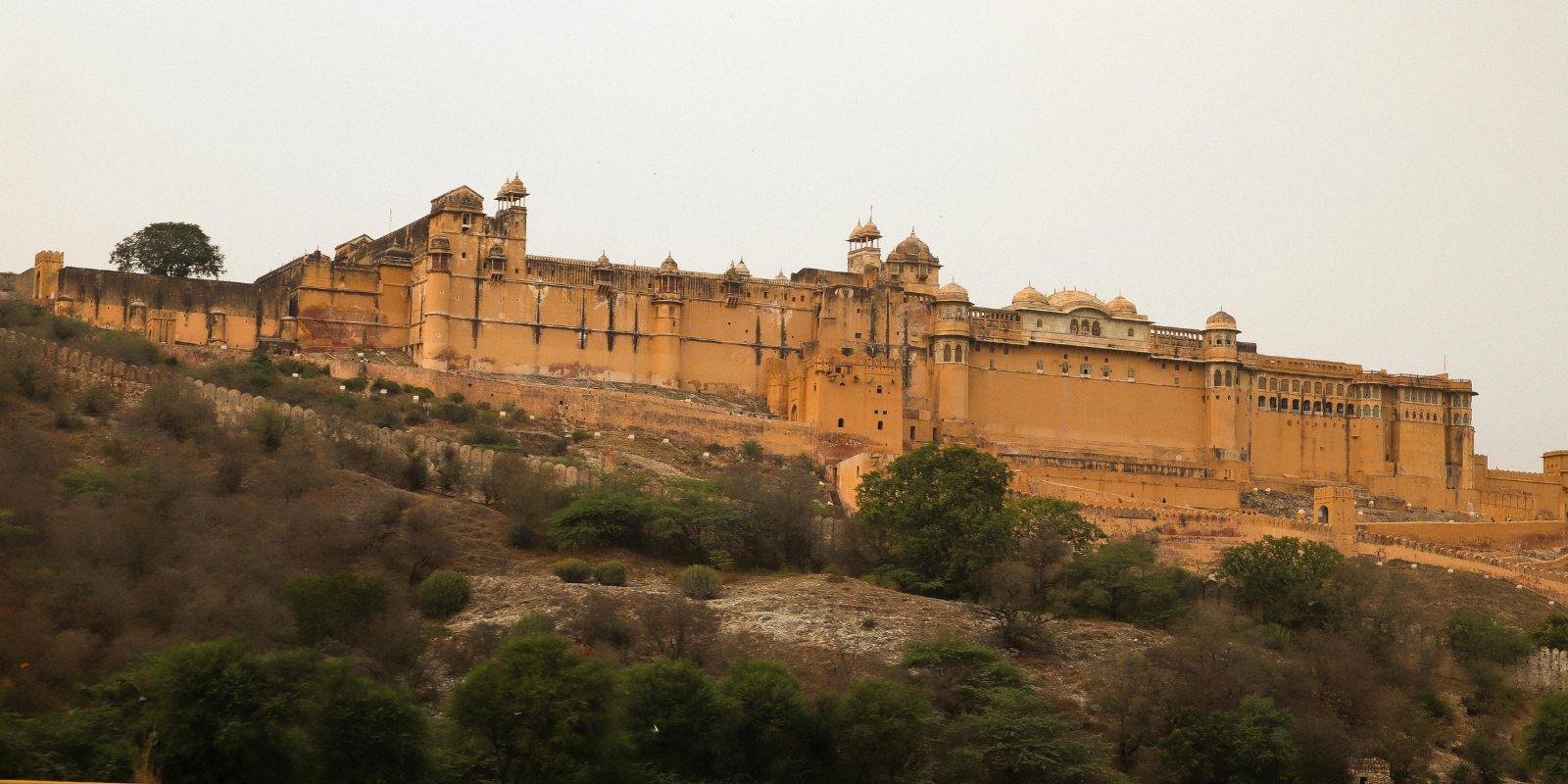
Amer Fort Palace – Amer is the classic romantic Rajasthan fort palace. Its construction was started by Man Singh I in 1592, and completed by his descendent Jai Singh I. Its forbidding exterior belies an inner paradise where a beautiful fusion of Mughal and Hindu styles finds its ultimate expression.
City Palace – A delightful blend of Mughal and traditional Rajasthani architecture, the City Palace sprawls over one-seventh of the area in the walled city. It houses the Chandra Mahal, Shri Govind Dev Temple and the City Palace Museum.
Jantar Mantar or Observatory – This is the largest and the best preserved of the five observatories built by Jai Singh II in different parts of the country. This observatory consisting of outsized astronomical instruments is still in use.
Hawa Mahal or Windsor Palace – The ornamental facade of this “Palace of Winds” is a prominent landmark in Jaipur. It is a five-storied structure of sandstone plastered pink encrusted with fine
Trelliswork and elaborate balconies the palace has 953 niches and windows. Built in 1799 by Pratap Singh, the Mahal was a royal grandstand for the palace women.
Overnight at Hotel in Jaipur
Breakfast at the hotel
After breakfast drive to Agra en-route visit en-route we will visit Fatehpur Sikri (Ghost Capital), the political capital of India’s Mughal Empire under Akbar’s reign, from the year 1571 until 1585, when it was abandoned, ostensibly due to lack of water. Visit Emperor Akbar’s Residential complex, Mosque & Tomb of Salim Chisti, Further we continue our drive to Agra, beautifully situated on the banks of river Yamuna. It achieved prominence as the capital of the Mughal Emperors from 1526 to 1628, remains major tourist destination because of its many splendid Mughal-era monuments,
Agra – This was the seat of the mighty Mughal Empire before it shifted its capital to Delhi, and it is home to some of their most inspired architectural creations including the Taj Mahal. In the 16th and 17th century, the Mughal Courts were at their most powerful, and were great patron of the arts, and Agra attracted artisans, poets and musicians from across India as well as Persia and Central Asia, transforming Agra into a cultural and architectural paradise
Overnight at Hotel in Agra
Breakfast at the hotel
After breakfast full day Agra city tour
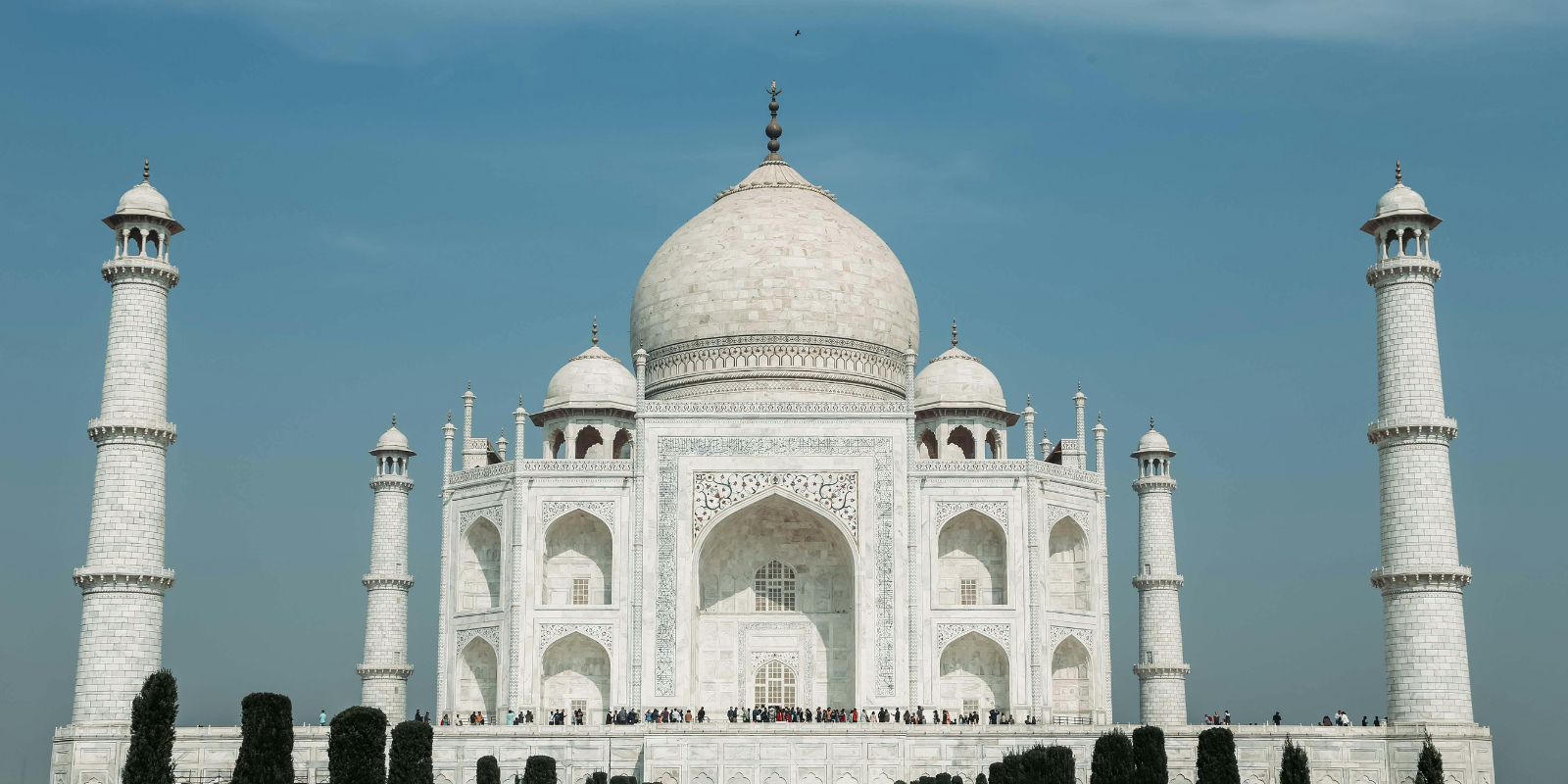
Taj Mahal- Little needs to be said about this architectural wonder which is always the soul raison-de-etre for every tourist’s visit to Agra. Built by Shah Jahan, the Taj is a white marble memorial to his beautiful wife Mumtaz Mahal. This monument took 22 years to be completed and was designed, and planned by Persian architect Ustad Isa. Apart from its stunning design balance and perfect symmetry, the Taj is also noted particularly for its elegant domes, intricately vehicleved screens and some of the best inlay work ever seen (Taj Mahal Closed on Friday)
After noon visit Agra Fort – The red sandstone structure is surrounded by chahar-bagh, a four-square formal garden. Built by the famed Mughal emperor Akbar in 1565 AD, the fort is predominantly of red sandstone. Ensconced within is the picture perfect Pearl Mosque, which is a major tourist attraction. It lies on the bend of the river Yamuna, almost in the heart of the town. Akbar built it as his citadel over the years 1563-73 in the finest architectural style. It has imposing gates and walls of red sandstone and a moat
Optional: In the evening, attend a performance at Kalakriti, a stunning performance art based rendition of the history of the Taj.
Overnight at Hotel in Agra
Breakfast at the hotel
After breakfast drive to Delhi to board your flight for Varanasi, upon arrival in Varanasi transfer to hotel Evening visit for Aarti Ceremony at Ghat
Varanasi -One of the seven holy Cities of India, Varanasi is the holiest of them all with a spiritual and religious legacy that goes back 5000 years and it is the oldest living city in the world. Situated on the banks of the holy river, Varanasi is also known as “Kashi”, the city of light. The focal point of the city is the “Ghats” or steps that lead down to the river. This is where pilgrims and local people gather for a cleansing dip in the holy river, worship the rising and setting sun and cremate the dead. It is believed that to be cremated in Varanasi is to escape the cycle of rebirth]
Overnight at Hotel in Varanasi
Early morning boat excursion on the holy river Ganges to see the bathing ghats and cremation site For the Hindus, bathing in Ganges signify purifying oneself, also it is a belief that to die in Kashi and to be cremated on the banks of River Ganges leads to Nirvana – the release from the cycle of birth and death. During the boat ride one can see people taking bath at the ghats and offering prayers, also see the cremation ghats important ones being the Harishchandra and Manikarna ghats where the funeral pyres burn 24 hours.
Later half day city tour of Varanasi is considered to be one of the oldest cities of India, also one of seven holy cities for the Hindus, stands as a chief centre of learning. The places of interest include visit to the Bharat Mata Temple dedicated to the motherland has a big relief map of India in marble; drive through the famous Banaras Hindu University. Walk in the narrow lanes of the city passing the Vishwanath Temple (non-Hindus not permitted entry) and visit the Alamgir Mosque, built on the original Vishnu temple by Aurangzeb in 17th century
Afternoon excursion of Sarnath Buddha gave his first sermon in 4th century BC in Sarnath (about 10 kms from Varanasi) and it became a centre of learning during 4th century BC to 9th century AD. Visit the ruins, the Dhamekh stupa, and Buddhist temple containing frescoes by a Japanese artist depicting scenes from Buddha’s life. The museum (closed on Fridays) has a well displayed collection of sculptures and pieces found from the site, including the famous Ashoka Chakra.
Overnight at Hotel in Varanasi
Breakfast at Hotel
Morning at leisure, later transfer to airport for Varanasi – Delhi, upon arrival in Delhi T-3 to connect your international flight for Own destination